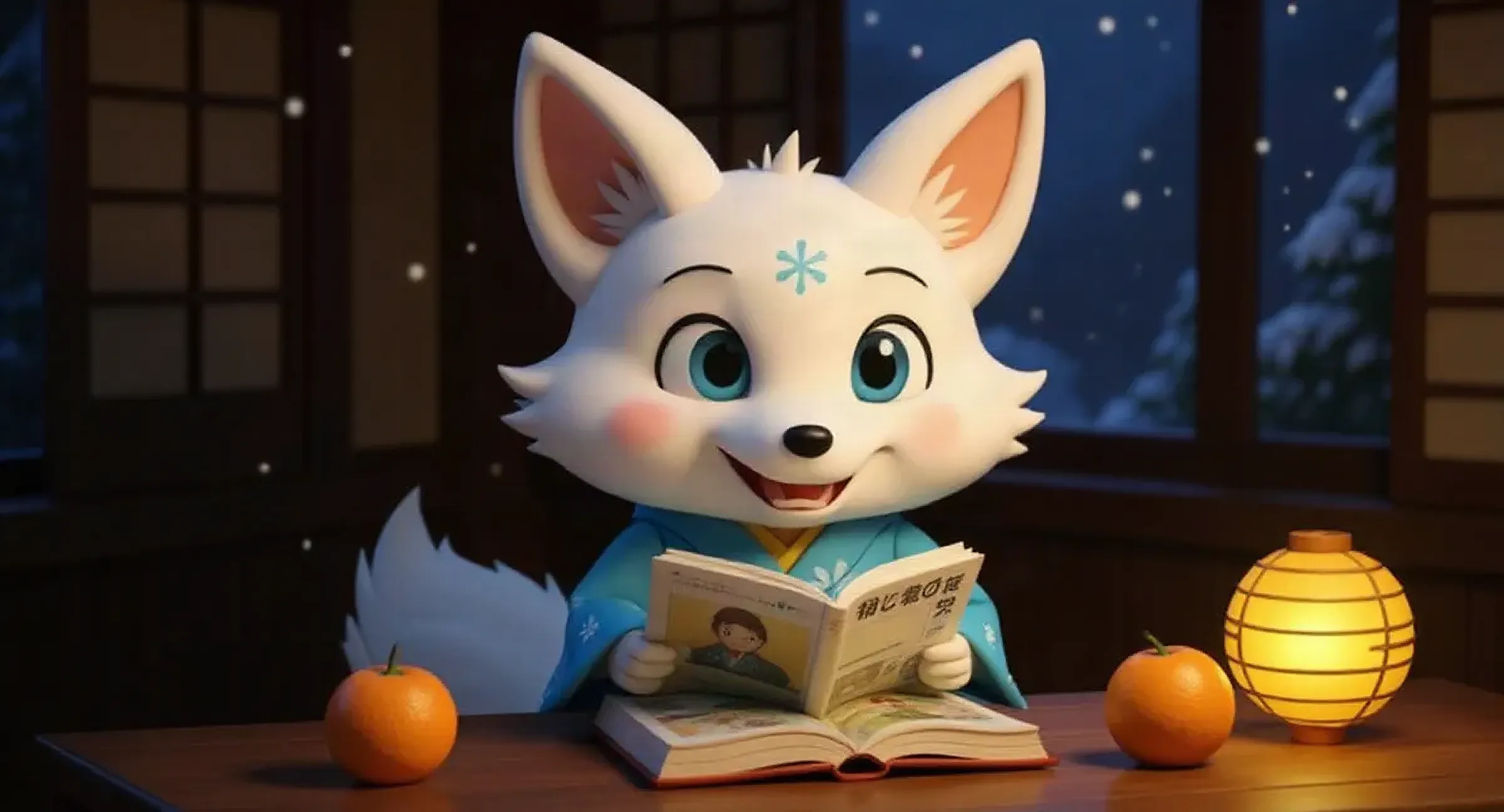
Manga is one of the best reasons to learn Japanese, and also one of the best tools for it. The pictures tell you what is happening, the sentences are short, and many series print furigana, the small readings that sit beside every kanji.
But let's be honest about one thing first: 30 days will not get you through One Piece. What 30 days can do is take you from zero to reading a short, simple manga chapter on your own. That first chapter is the moment Japanese stops feeling like a wall and starts feeling like a door.
What "reading manga" means after 30 days
After about a month of short daily study, a typical beginner can:
- Read all hiragana and katakana (see the charts), so every sound effect like ドキドキ (heartbeat) or ゴゴゴ (rumbling) makes sense.
- Recognise 150–250 everyday words: greetings, feelings, food, places, people.
- Understand basic sentence patterns: です, は, が, を, the polite ~ます form and simple past tense.
- Read lines like 「ちょうちんが きえました。」 ("My lantern went out.") and know exactly what each part does.
That's enough for a manga written at beginner level. It is not enough for adult novels, news or fast anime dialogue. Those come later, and they come faster once you have this foundation.
Why manga works so well for beginners
Pictures give you context. If a character is shivering in the snow and says さむい, you can guess it means "cold" before you look it up. Guessing from context is how your brain locks words in.
Sentences are short. Speech bubbles rarely hold more than one or two short sentences. That's perfect for a beginner's working memory.
Furigana removes the kanji fear. In manga for younger readers, every kanji has its reading printed beside it. You read the furigana, and over time the kanji itself starts to look familiar.
Sound effects teach katakana for free. Manga is full of katakana sound effects. Every page is extra practice.
It's fun. The biggest predictor of success in language learning is whether you keep going. A story you want to finish is a much better motivator than a textbook drill.
The 30-day plan, week by week
This plan assumes about 20 minutes a day.
Week 1: Hiragana
Learn the 46 basic hiragana, about 7 a day, using picture mnemonics. Review the old ones every day before adding new ones. By day 7 you can sound out words like ゆき (snow) and さむい (cold).
Tip: don't use romaji (Latin letters) as a crutch. Read the kana directly from day one, even if it's slow.
Week 2: Katakana and your first 50 words
Katakana covers the same sounds as hiragana, so it goes faster. Learn it alongside your first 50 words: greetings, numbers, and words you'll meet in the story, like カフェ (café) and ココア (cocoa).
Week 3: How manga sentences work
Learn the handful of particles that hold Japanese sentences together:
| Particle | What it does | Example |
|---|---|---|
| は (wa) | marks the topic | わたしは ゆきです。 (I'm Yuki.) |
| が | marks the subject | ちょうちんが きえた。 (The lantern went out.) |
| を | marks the object | ココアを ください。 (Cocoa, please.) |
| に | direction, place, time | カフェに いく。 (I go to the café.) |
| の | "of" / possession | ゆきの ちょうちん (Yuki's lantern) |
Then learn the difference between casual and polite speech. Manga uses both, often in the same scene: きえた (casual) and きえました (polite) mean the same thing.
Week 4: Read your first chapter
Read one short chapter slowly. Read each bubble out loud, look up only the words you can't guess, and re-read the whole chapter at the end. The second reading is where it clicks. You'll be surprised how much you understand.
Easy manga to read in Japanese
The best manga for Japanese learners have short sentences, everyday conversation and furigana. Three classics that learners start with:
| Manga | Why it works for learners | Level |
|---|---|---|
| Yotsuba&! (よつばと!) | Everyday life seen through a five-year-old, with furigana on the kanji | First real manga |
| Chi's Sweet Home (チーズスイートホーム) | Very short sentences, mostly hiragana, told by a kitten | First real manga |
| Doraemon (ドラえもん) | A children's classic with full furigana and simple dialogue | Early beginner |
Yotsuba is the usual first pick: "reading Yotsuba in Japanese" is a milestone many learners aim for after a few months.
What to read after your first chapter
Once you've finished a beginner chapter, step up gradually:
- More graded manga written for learners, at a slightly higher level.
- Children's manga with full furigana. These are written simply and printed with readings.
- Slice-of-life series with everyday conversation, like the ones in the table above.
- Your favourite series, once everyday conversation feels comfortable.
Each step should feel slightly hard, but not impossible. If you're looking up more than one word in every bubble, step back a level for a while.
Common mistakes to avoid
- Starting with your favourite series on day one. It's demotivating. Save it as a goal.
- Looking up every single word. Guess from the picture first. Look up only what blocks the meaning.
- Reading silently and fast. Read out loud and slowly at first. Speed comes later.
- Skipping reviews. New words fade quickly unless you see them again in the next few days.
How Yuki helps
Yuki's 30-Day Challenge follows this exact plan. Every word in its first manga chapter, Yuki and the Lantern, is taught during the 30 days, so on day 30 you really can read the whole thing. Yuki only shows readings above kanji you haven't learned yet, and any word you get wrong comes back in your next review.

