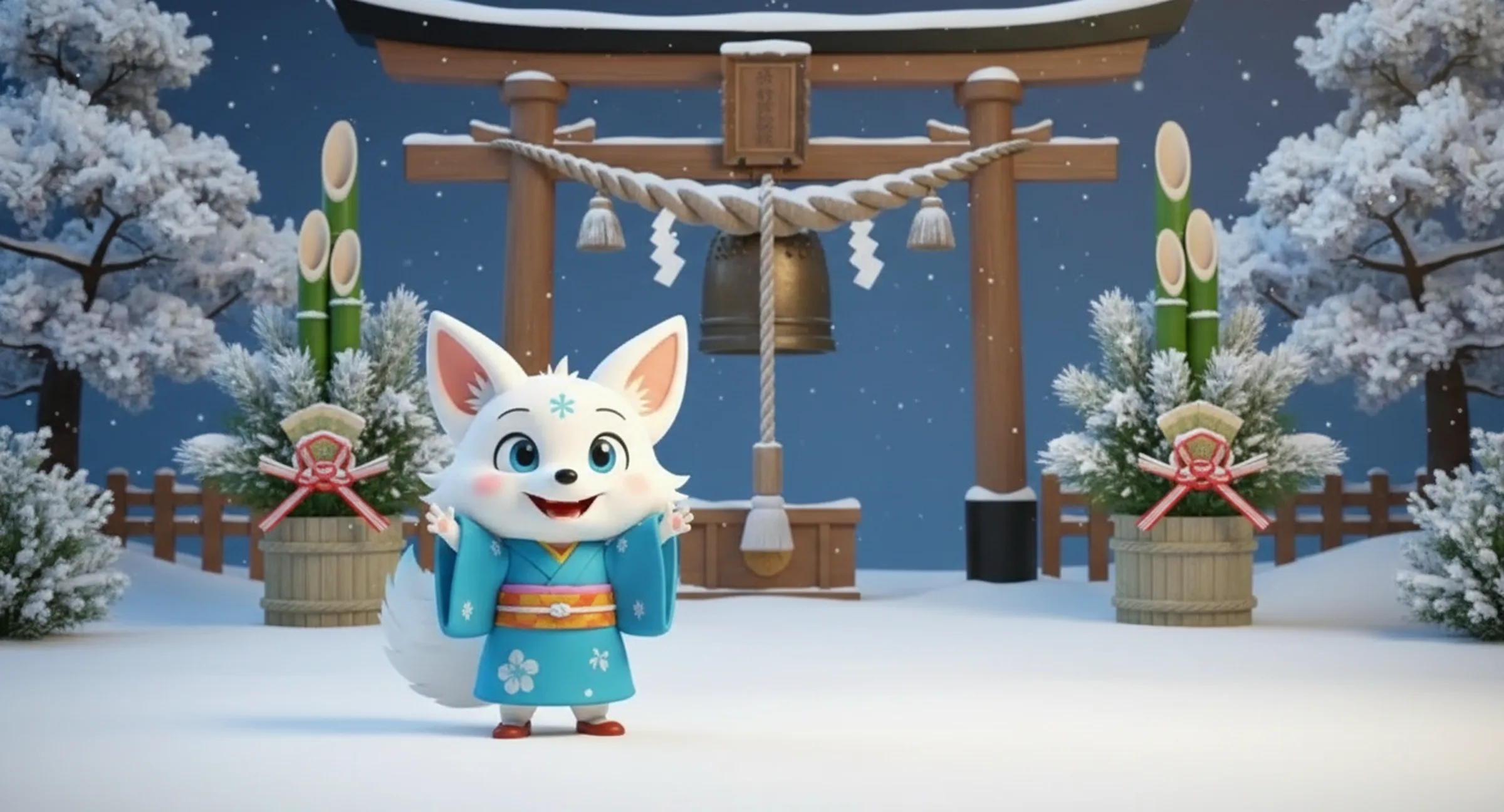
How do you say fox in Japanese? Fox in Japanese is 狐 (きつね, kitsune). You'll see it written in kanji, in hiragana as きつね, or in katakana as キツネ.
The fox is also one of the most famous animals in Japanese folklore, and Yuki, the guide in this site's manga, is a snow fox. So this page is a little personal.
Fox words in Japanese
Here's the fox vocabulary you'll actually meet, from the zoo to the noodle shop.
| Word | Reading | Meaning | Nuance |
|---|---|---|---|
| 狐 / きつね | きつね | fox | Neutral, everyday |
| キツネ | きつね | fox | Katakana: science writing, signs, stylized |
| 子ぎつね | こぎつね | fox cub | Note the sound change to ぎ |
| 九尾の狐 | きゅうびの きつね | nine-tailed fox | Folklore, anime |
| こんこん | こんこん | the fox's cry | Children's songs, manga |
| きつねうどん | きつねうどん | udon with fried tofu | Everyday food |
| ホッキョクギツネ | ほっきょくぎつね | Arctic fox | Animal name |
| キタキツネ | きたきつね | Hokkaido red fox | Animal name |
In compounds, きつね often becomes ぎつね, as in 子ぎつね and ホッキョクギツネ. That sound change is called rendaku.
こんこん: what foxes say
Japanese foxes say こんこん (kon kon). You'll hear it in children's songs about little foxes and see it in manga. The same sound also means a light cough or a knock on the door, so context matters.
Kitsune in Japanese folklore
In Japanese folklore, the fox is a clever, magical animal that can be helpful, mischievous or dangerous, depending on the story. Here are the best-known ideas.
Inari's messengers
Foxes are traditionally seen as messengers of Inari (稲荷, いなり), the Shinto deity of rice, harvests and prosperity. That's why pairs of fox statues stand at Inari shrines across Japan. The most famous is Fushimi Inari Taisha in Kyoto, known for its long tunnels of red torii gates. A common misunderstanding is that the fox itself is Inari; most accounts describe it as the messenger.
Many tails
In many stories, a fox grows more tails as it gets older and more powerful, up to nine. The nine-tailed fox, 九尾の狐, is a legendary figure that shows up often in anime and games.
Shape-shifting
Folktales often describe foxes that can take human form, frequently as a beautiful woman, to trick or sometimes help people. The idiom 狐に つままれる (to be pinched by a fox) means to be completely bewildered, as if a fox had bewitched you.
狐の嫁入り: a sun shower
狐の嫁入り (きつねの よめいり), "the fox's wedding," is a poetic name for rain falling while the sun is shining.
きつねうどん
きつねうどん is udon topped with sweet, seasoned fried tofu (油揚げ, あぶらあげ). The name comes from the traditional idea that foxes love fried tofu, which is also why いなりずし, sushi rice in a fried-tofu pouch, is named after Inari.
Yuki the snow fox
Yuki, the guide who walks you through the free 30-Day Challenge and the manga Yuki and the Lantern, is a snow fox, named after 雪 (ゆき, snow), which is one of the first kanji in the course.
Real life vs anime
In real life, きつね is a plain animal word, and you'll most often say it ordering きつねうどん. In anime and games, fox spirits, nine tails and fox-eared characters are everywhere. It's fun, but the folklore varies a lot from story to story, so treat any single version as one telling, not "the" rule.
When NOT to use these words
- Calling a person 狐. It can mean someone sly or cunning, which isn't a compliment.
- こんこん as a fox word in serious writing. It's a sound for songs and manga. In a report, just write きつね.
- Assuming every fox statue is a god. At Inari shrines, they're messengers.
Example sentences
- 山道で きつねを 見ました。 I saw a fox on a mountain path.
- お昼に きつねうどんを 食べました。 I had kitsune udon for lunch.
- 晴れているのに 雨が ふっている。狐の嫁入りだね。 It's sunny but raining. A fox's wedding.
- 神社の 前に きつねの 像が 二つ ある。 There are two fox statues in front of the shrine.
- なんだか 狐に つままれたような 気分だ。 I feel totally bewildered, like a fox tricked me.
Common mistakes
- Reading 子狐 as こきつね. It's usually こぎつね, with the sound change.
- Saying the fox is Inari. It's best described as Inari's messenger.
- Confusing こんこん with コンコン the cough. Same sound, different meaning.
- Counting foxes with 人. Like cats and dogs, use 匹 (ひき).
Yuki says: if you visit an Inari shrine, look closely at the fox statues. Many hold something in their mouths, like a key or a jewel. And yes, I'm flattered.
Related words
- Snow in Japanese: 雪, where Yuki's name comes from.
- Dog in Japanese: 柴犬, the fox-faced dog.
- Cat in Japanese: 猫, Japan's other folklore favorite.
Keep going
Animal words like きつね are great reading practice. See how stories help you learn in learning Japanese from manga, and read きつね and キツネ fast with the free kana quiz.